Road pedals comparison 2025: what really matters for your knees
Q-factor, stack height, contact area, weight: the four criteria a bike fitter looks at before the brand, and the models that stand out this year.
By Gaspard Blanc, osteopath (D.O.) and bike fitter · Published 1 October 2025, updated 8 October 2026
The road pedal market moves fast, with a stated goal: improving the cyclist’s efficiency and comfort. Between new releases and spec sheets, it is hard to find your way. As an osteopath and bike fitter, I look first at what the pedal does to your joints. Here are the criteria, then the models.
The 4 criteria to understand before choosing
1. Q-factor
This is the distance between the two pedals. The wider it is, the further your feet sit from the bike’s centreline. A Q-factor that is too wide changes the pedalling motion and knee alignment; too narrow, it can bother wide hips or knees that drop in. The right value depends on your body and your alignment: it is one of the first things I check during a bike fit.
2. Stack height
This is the thickness between your sole and the pedal axle, cleat included. The lower it is, the more direct the power transfer and the more stable the foot. The best 2025 pedals go below 18 mm. Be careful: changing stack means changing saddle height.
3. Weight
Between the lightest (Time XPRO 12 SL, 174 g) and the heaviest (Favero Assioma Duo, 303 g), the gap is over 120 g per pair. It is not decisive on its own, but at equal performance, a weight saving is felt on long climbs.
4. Contact area
This is the contact zone between the cleat and the pedal body. The wider it is, the more stable the foot and the better the pressure is spread. It is a key criterion for foot comfort and the prevention of knee pain.
Comparison table
| Model | Q-factor (mm) | Stack (mm) | Contact area (mm²) | Weight (g, per pair) |
|---|---|---|---|---|
| Shimano Dura-Ace / Ultegra / 105 | 52–53 | 21 | 500 | 228–248 |
| Look Keo Blade Power / Ceramic | 53 | 14.8–17.1 | 705 | 190–260 |
| Wahoo Speedplay Nano / Dual Power | 53–55 | 17–19 | 400 | 168–276 |
| Favero Assioma Duo | 54 | 21.5 | 400 | 303 |
| Time XPRO 12 SL | 51 / 53 / 57 | 19.8 | 725 | 174 |
| Ekoï PW8 | 53 | ≈ 17.5 | ≈ 700 | 174 |
The 2025 models up close
Shimano Dura-Ace, Ultegra, 105
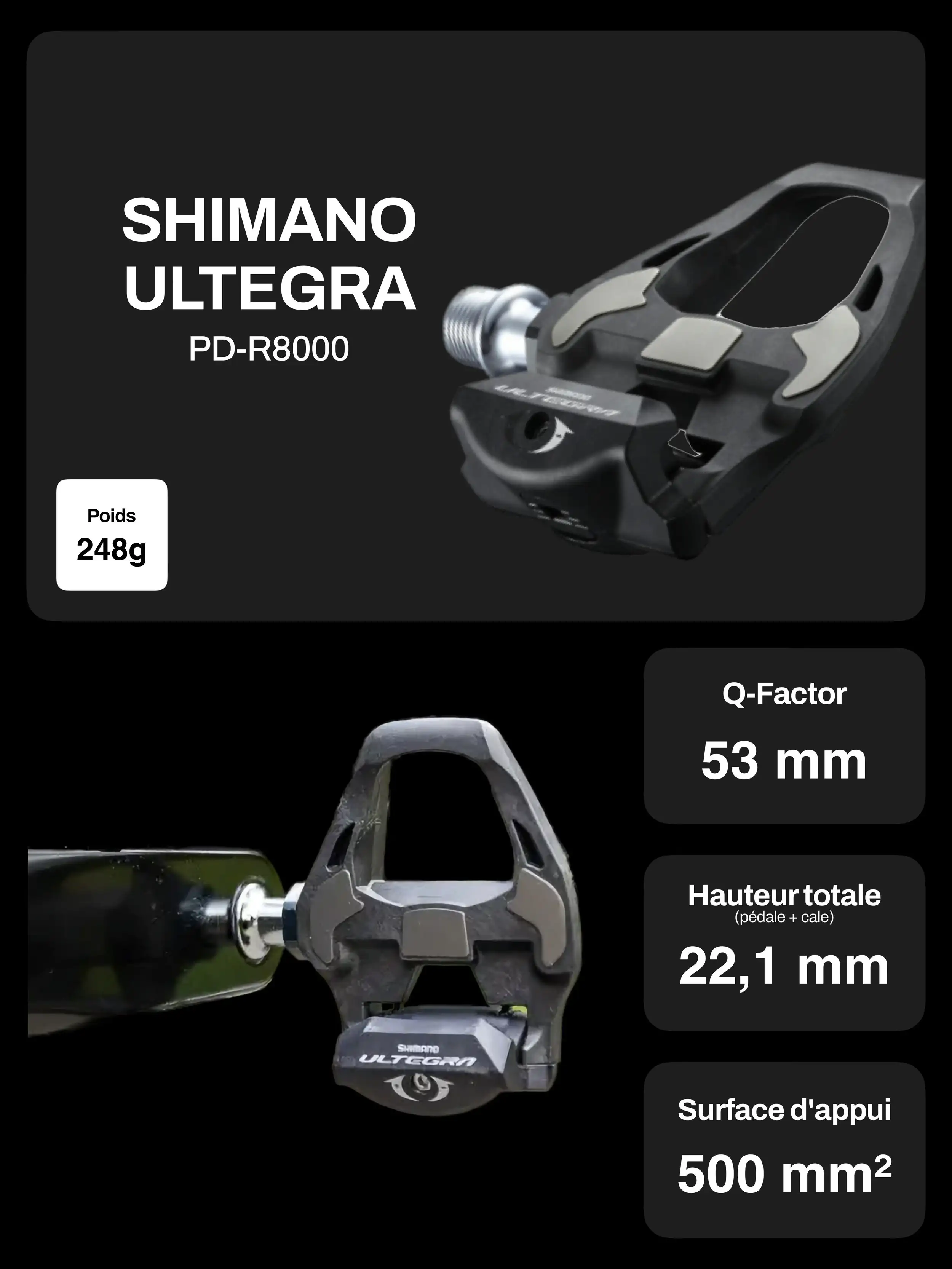
The safe bet. Robust, reliable, intuitive, the Shimano range remains a standard. Q-factor 52–53 mm, stack 21 mm, contact area 500 mm², 228 to 248 g. Ideal for those who want an efficient, stable and durable pedal with no surprises.
Look Keo Blade Power Dual and Ceramic
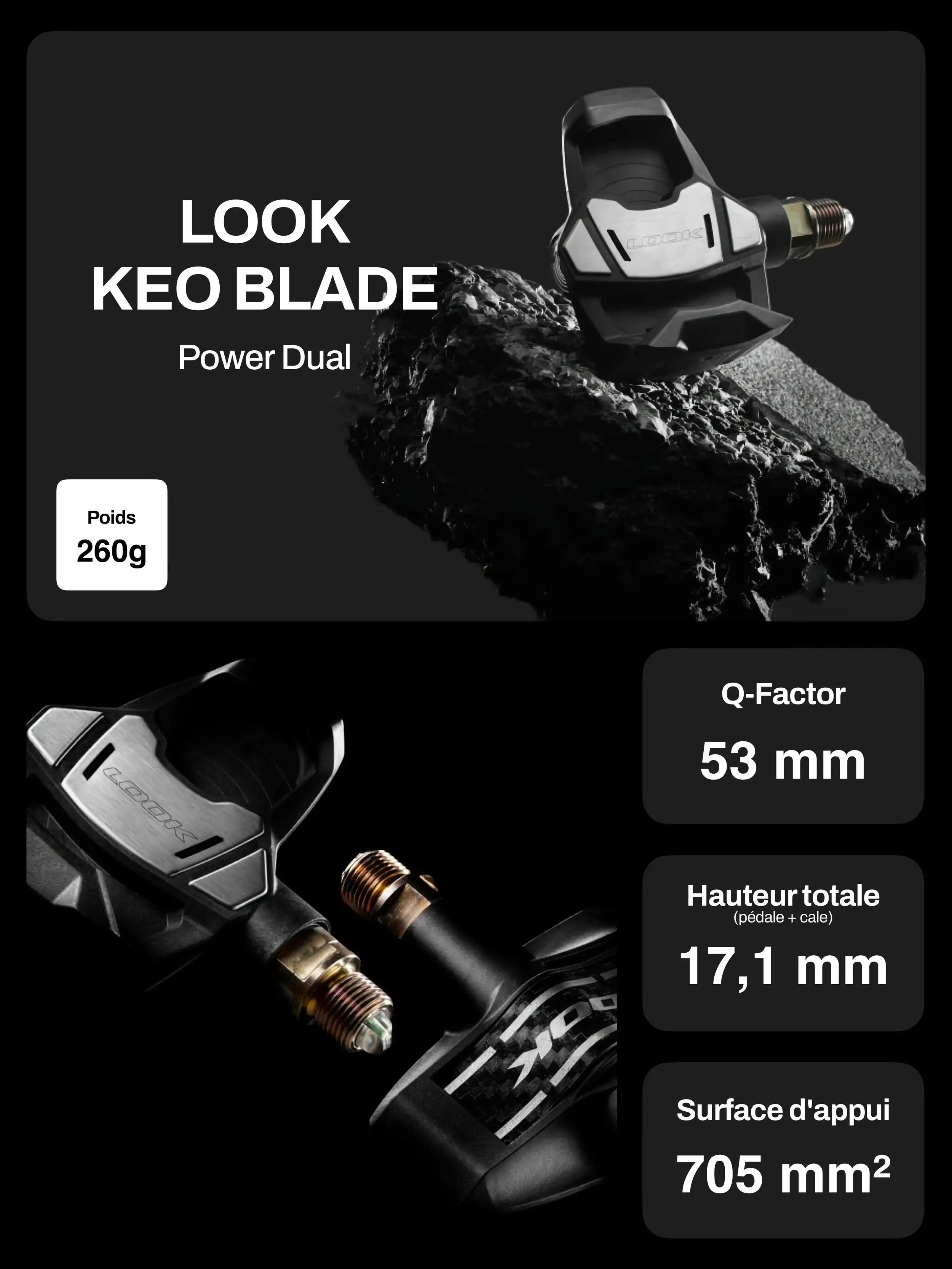
Sharp design and consistent performance. The carbon blade gives a firm, precise engagement for a contained weight. Q-factor 53 mm, stack 14.8 to 17.1 mm, contact area 705 mm², 190 to 260 g. A high-end choice for efficiency and direct feel.
Wahoo Speedplay Nano and Dual-Sided Power
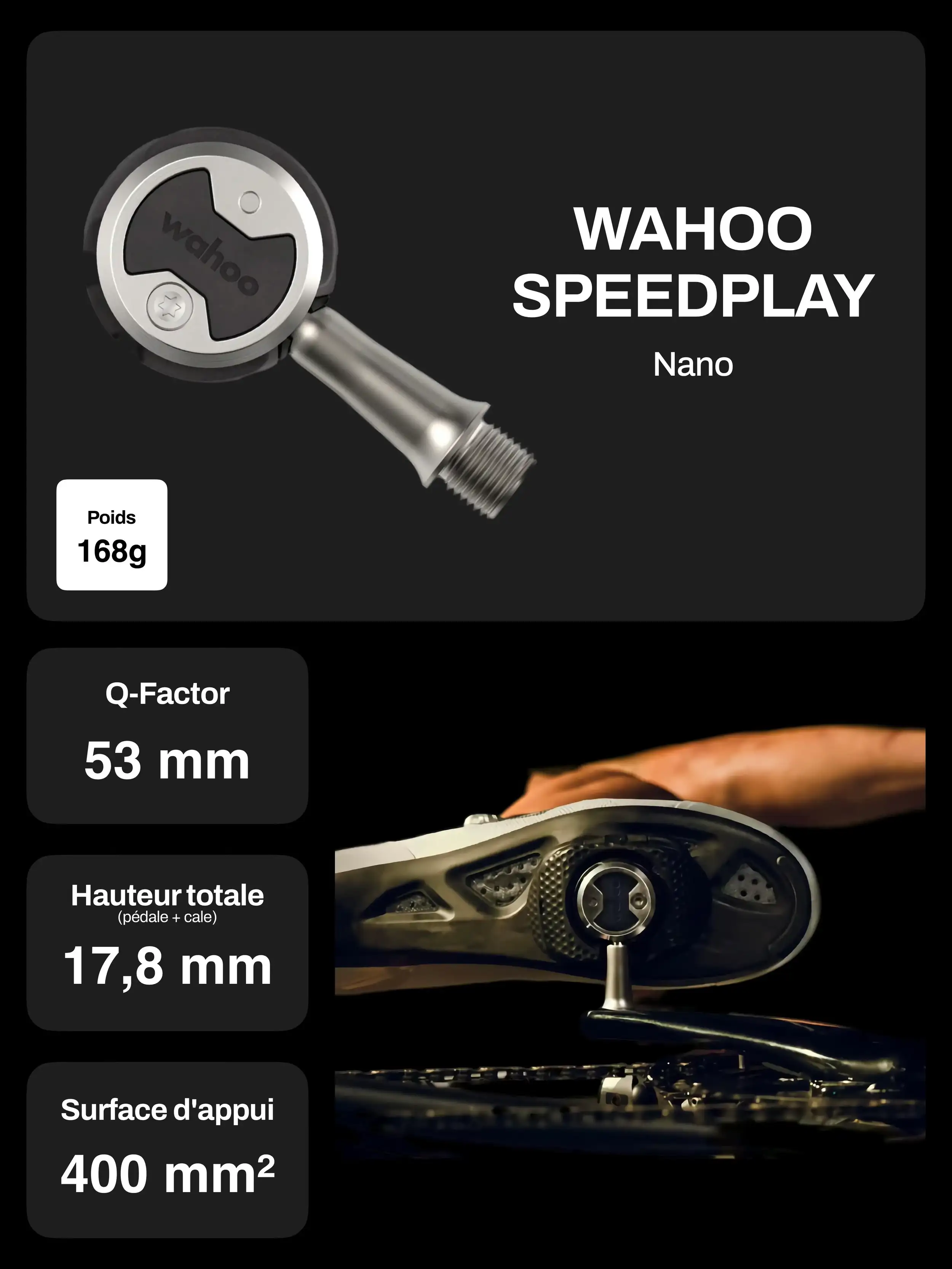
The only dual-sided pedals on the market, with fine adjustment of Q-factor and float. Q-factor 53 to 55 mm, stack 17–19 mm, contact area 400 mm², 168 to 276 g. Very technical, perfect for cyclists who pay attention to their posture.
Favero Assioma Duo
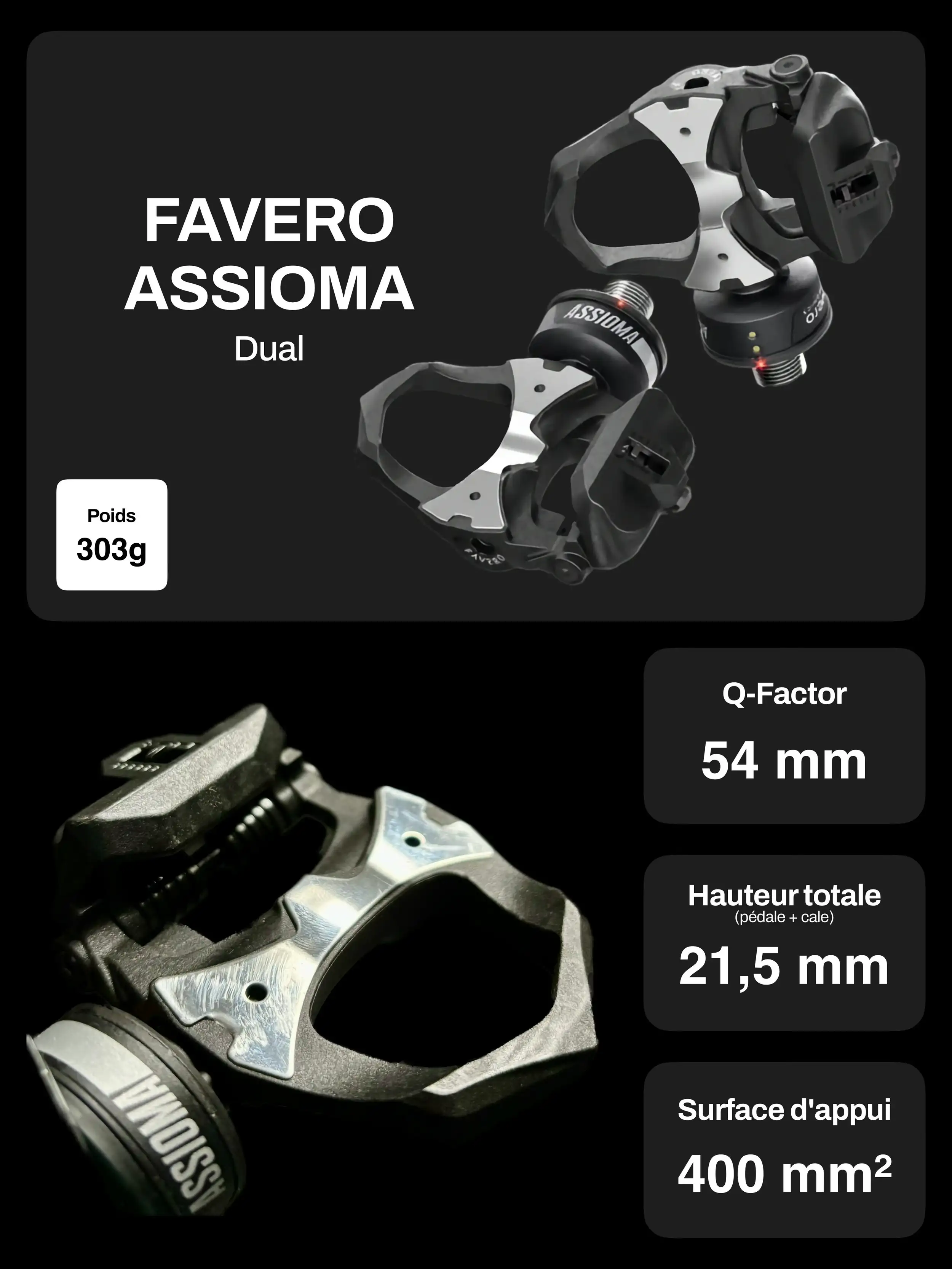
The reference for built-in power meters, accurate to ±1%. Q-factor 54 mm, stack 21.5 mm, contact area 400 mm², 303 g. Heavier, but the measurement is unmatched for training.
Time XPRO 12 SL
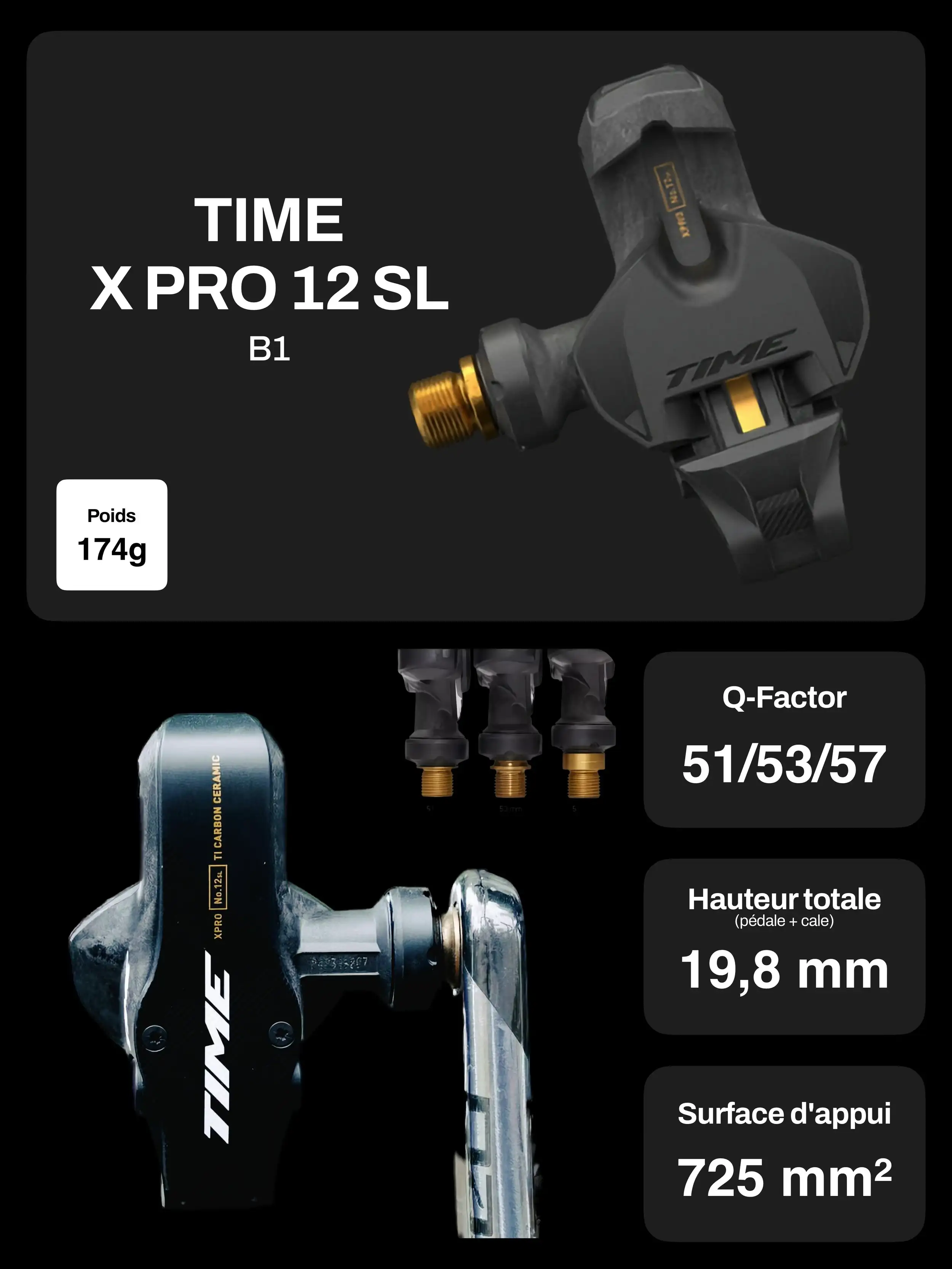
Ultra-light and designed for joint comfort. Adjustable Q-factor 51 / 53 / 57 mm, stack 19.8 mm, contact area 725 mm², 174 g. An excellent combination of power, stability and biomechanical freedom.
Ekoï PW8
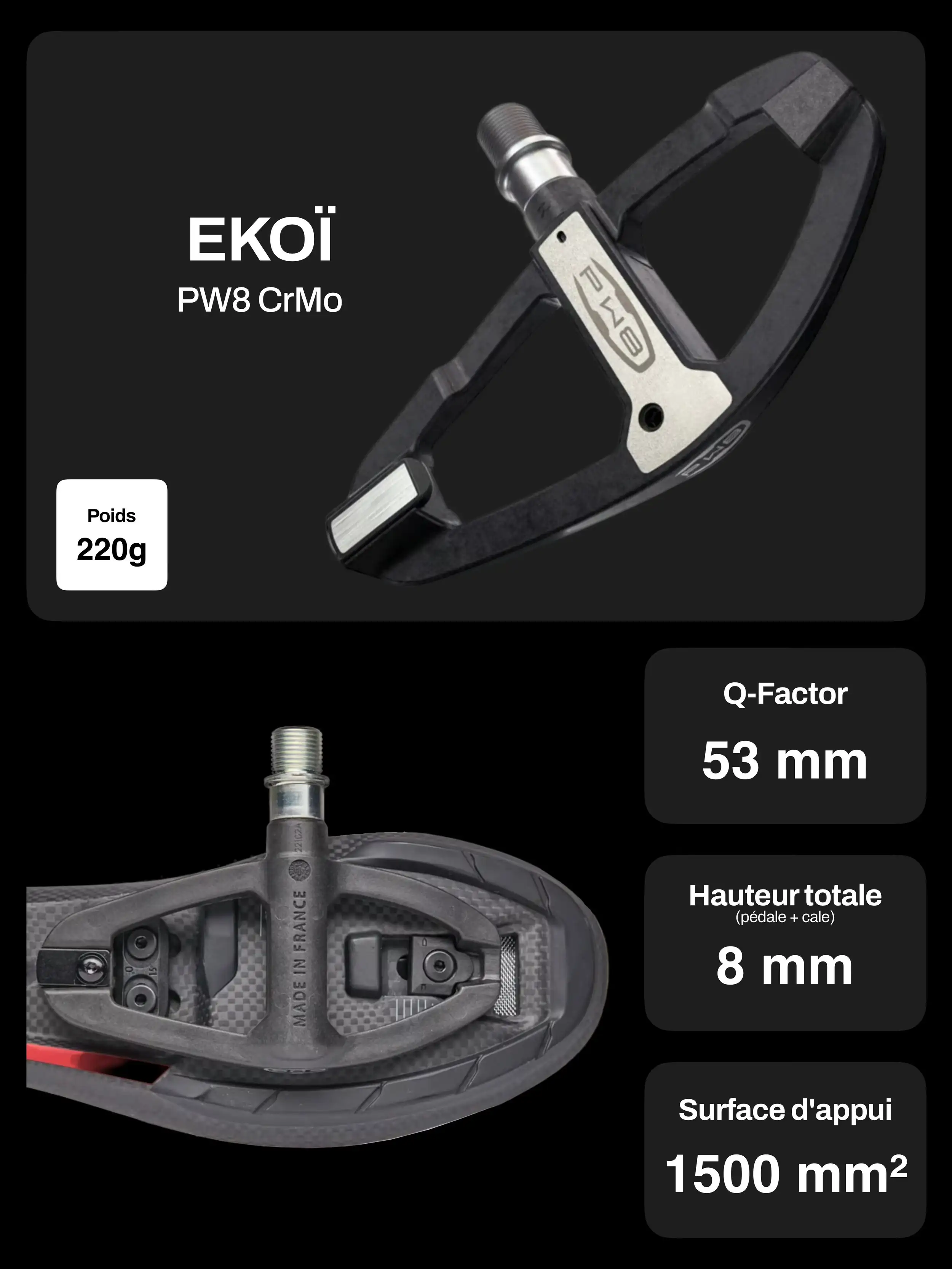
The nice French surprise: light, efficient, often cheaper than the big brands. Q-factor 53 mm, stack ≈ 17.5 mm, contact area ≈ 700 mm², 174 g. Very good value for performance.
Which pedal to choose?
- Pure performance: Look Keo Blade Power Dual or Time XPRO 12 SL, low stack and excellent transfer.
- Analysis and training: Favero Assioma Duo, impeccable measurement accuracy.
- Postural comfort: Wahoo Speedplay Nano, precise Q-factor adjustment.
- Versatility: Shimano Ultegra, a balance of stability and durability.
In conclusion
Choosing a pedal is not just about weight or brand. Q-factor, stack and contact area influence posture, stability and power. The 2025 trend: less height, more contact, more biomechanical precision. And whatever the pedal, it is the cleat setup that decides your knee alignment.
To go further, a bike fit adapts your position and your equipment to your body. If you change pedals, a cleat setup (30 minutes, €40) is often enough to get your bearings back.
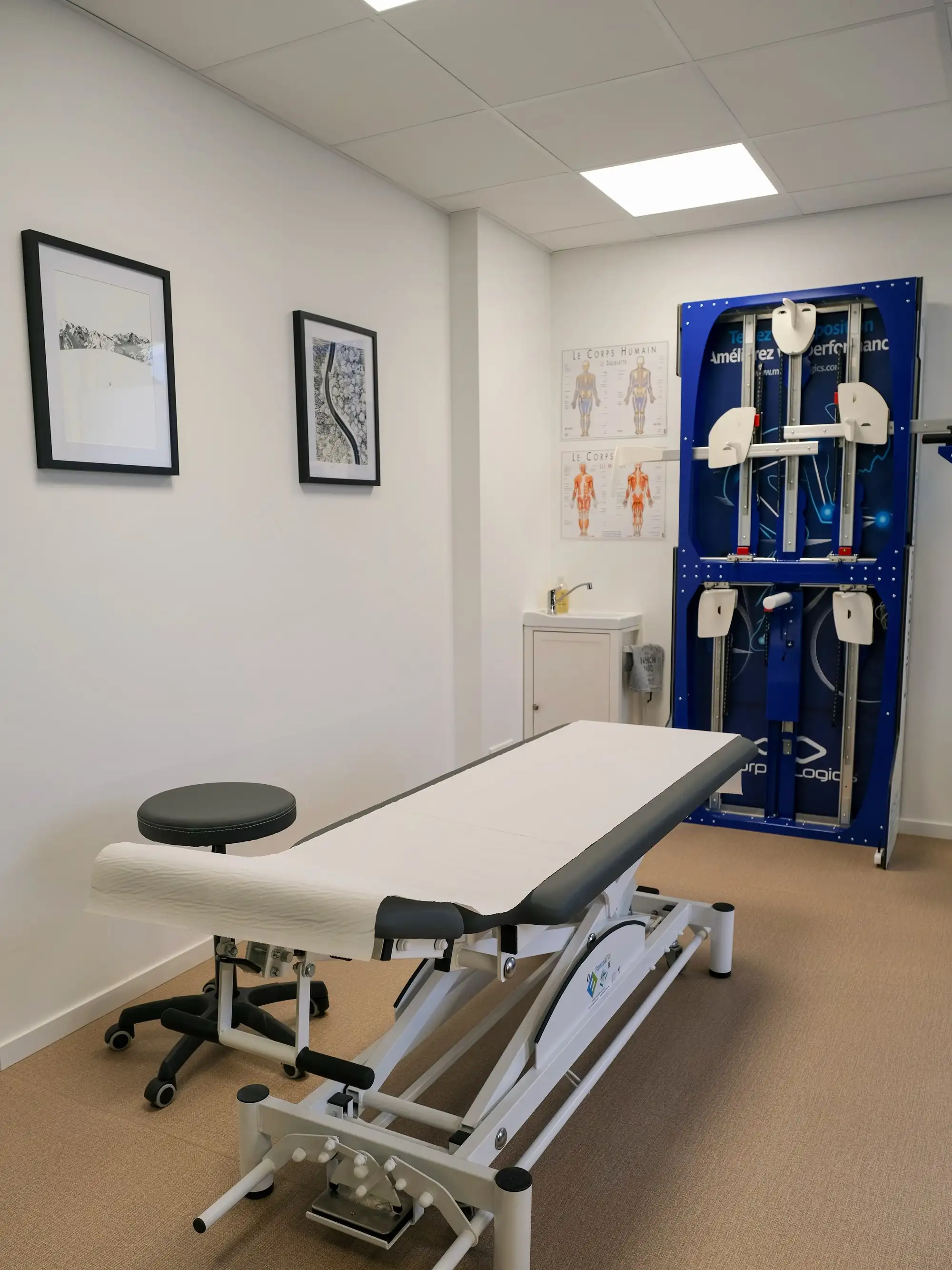
Want to go further?
Come and see me in Viviers-du-Lac, between Aix-les-Bains and Chambéry, for tailored support.