Saddle pain when cycling: sit bones, perineum, tailbone
The saddle is the contact point that carries the most weight, and the one we talk about least. Where it hurts almost always tells you what is wrong.
By Gaspard Blanc, osteopath (D.O.) and bike fitter · 13 October 2026
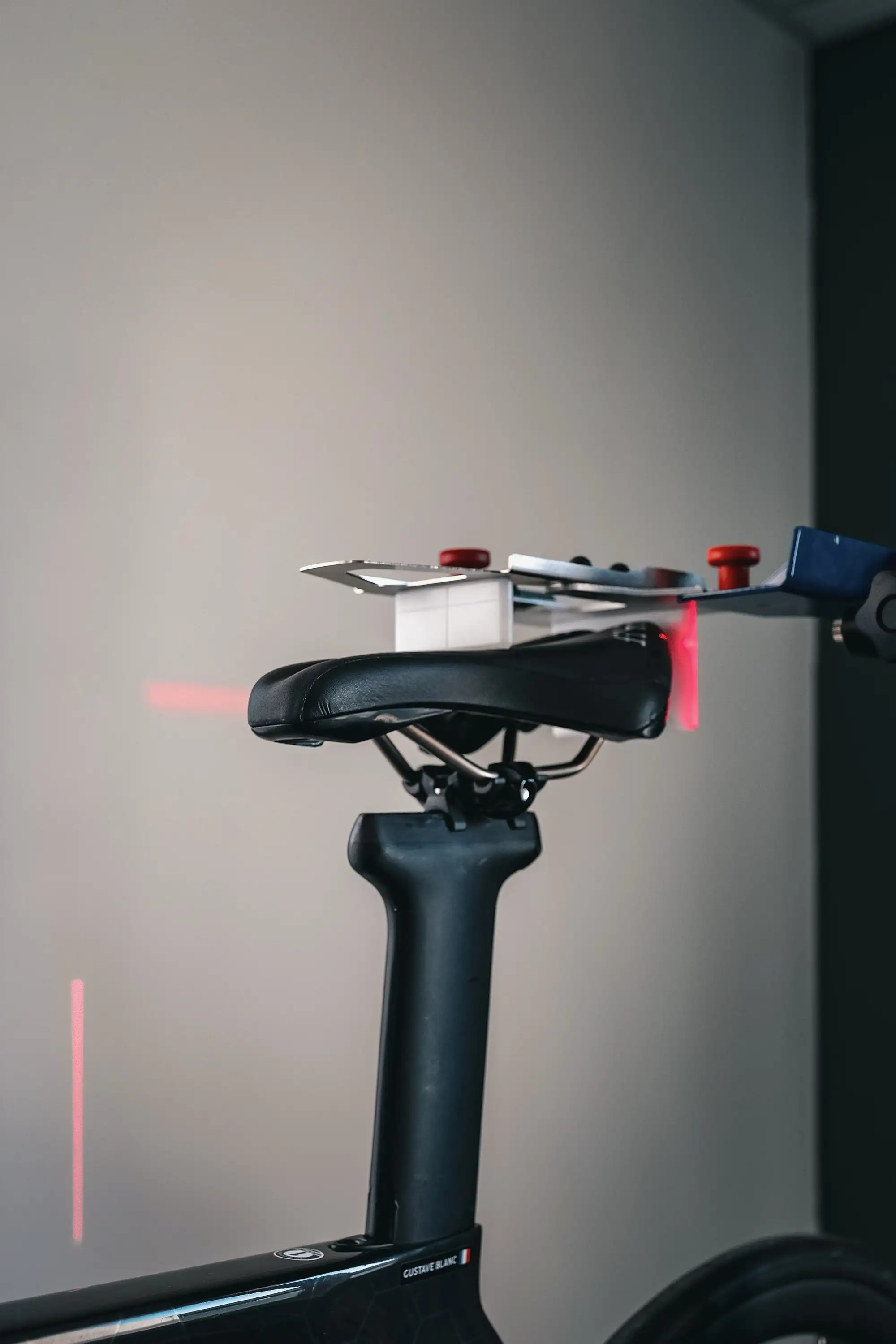
On a well-set-up bike, the pelvis rests on the saddle through its two sit bones, the bony points you feel under your buttocks when you sit on a hard surface. The perineum, between the two, should carry almost nothing. As soon as this balance breaks down, pain appears, and its exact location points to the cause. Here are the four patterns I see most often at the practice, and what I change for each.
1. Pain on the sit bones: the width
Pain on both bones, symmetrical, from the first few kilometres, easing as you ride and coming back on every ride. It almost always comes from a saddle that is too narrow for the spacing of your sit bones: they rest on the rounded edges instead of the flat part. The opposite exists too, a saddle that is too wide and rubs the inside of the thighs.
What I do: I measure the sit bone width, seated on a pad that keeps the imprint, then compare it with the width of your saddle. A difference of more than 10 to 15 mm explains the pain on its own. The riding position counts too: the lower you are on the handlebar, the further forward and closer together the contact points move, and the narrower the saddle can be.
2. Numb perineum: the pressure
Tingling or numbness between the thighs, sometimes a burning feeling, that goes away when you stand up on the pedals. This is pressure on the perineum, and in women often pain at the front. Three adjustments are responsible far more often than the saddle itself.
Adjustments involved: a saddle tilted nose up, a saddle that is too high and makes the pelvis slide forward to reach the pedals, a handlebar that is too far away or too low and tips all the weight onto the front of the saddle.
What I do: I put the saddle back level or very slightly nose down, I check the height, I bring the handlebar closer if hip flexion cannot follow. If the numbness persists with a correct position, a saddle with a central channel or a short saddle changes everything, as long as the width stays right.
3. Pain at the tailbone or further back: the tilted pelvis
Pain at the bottom of the spine, at the tip of the tailbone (coccyx) or on the sacrum, especially when climbing seated or on rough roads. The pelvis is tilted backwards, in posterior tilt, and the tailbone comes into contact with the saddle. I see it in cyclists whose hips lack mobility, or whose saddle is too far back relative to the bottom bracket.
What I do: I test hip flexion off the bike. If it is limited, I treat it with osteopathy before touching the bike, otherwise the adjustment will not hold. Then I move the saddle slightly forward or slightly down so that the pelvis sits back on the sit bones.
4. Chafing and soreness: the pelvis that moves
Irritation on the inside of the thighs or in the crotch, sometimes sores after long rides. The shorts and the chamois cream are rarely the primary cause. The pelvis moves on the saddle with every pedal stroke, and every movement rubs.
Adjustments involved: a saddle that is too high, by far the most common, which forces the pelvis to rock from one side to the other to reach the bottom of the pedal stroke. A leg length difference gives the same picture, with soreness on one side only. A real case is described on the bike fit page: the problem was solved by shortening one crank by 5 mm, not by changing the saddle.
In what order to act
The position first, the saddle second. A new saddle fitted on a saddle that is too high or a handlebar that is too far away gives the same pain, somewhere else. At the practice, the order is always the same: hip and pelvis mobility off the bike, saddle height, setback and tilt on the indoor trainer, observation of pelvic stability while pedalling, then only the choice of saddle, with the width measured on the pad. If your saddle needs changing, I tell you the width and type that suit you, and I redo the setup on the new one.
For an isolated saddle pain on a city or leisure bike, the one-hour basic bike fit is usually enough. For sports riding or pain that comes with a knee or back problem, it is the full bike fit. And if the numbness persists off the bike, talk to your doctor before anything else.
In short
How do I know if my saddle is too narrow?
If the pain is on the two bony points of the buttocks, the sit bones, and appears within the first few kilometres, the saddle is probably too narrow or too rounded for your pelvis. I measure the sit bone width at the practice, in two minutes.
Is a numb perineum serious?
It should not be dismissed. Numbness that goes away when you stand up on the pedals comes from pressure on the saddle: I adjust the tilt, the setback and the position before changing the saddle. If it persists off the bike, see your doctor.
Should I change the saddle or adjust the position?
In this order: the position first, the saddle second. A new saddle on a wrong position gives the same pain somewhere else. When the position is right and the pain remains, it is the saddle, and I tell you the width and type that suit you.
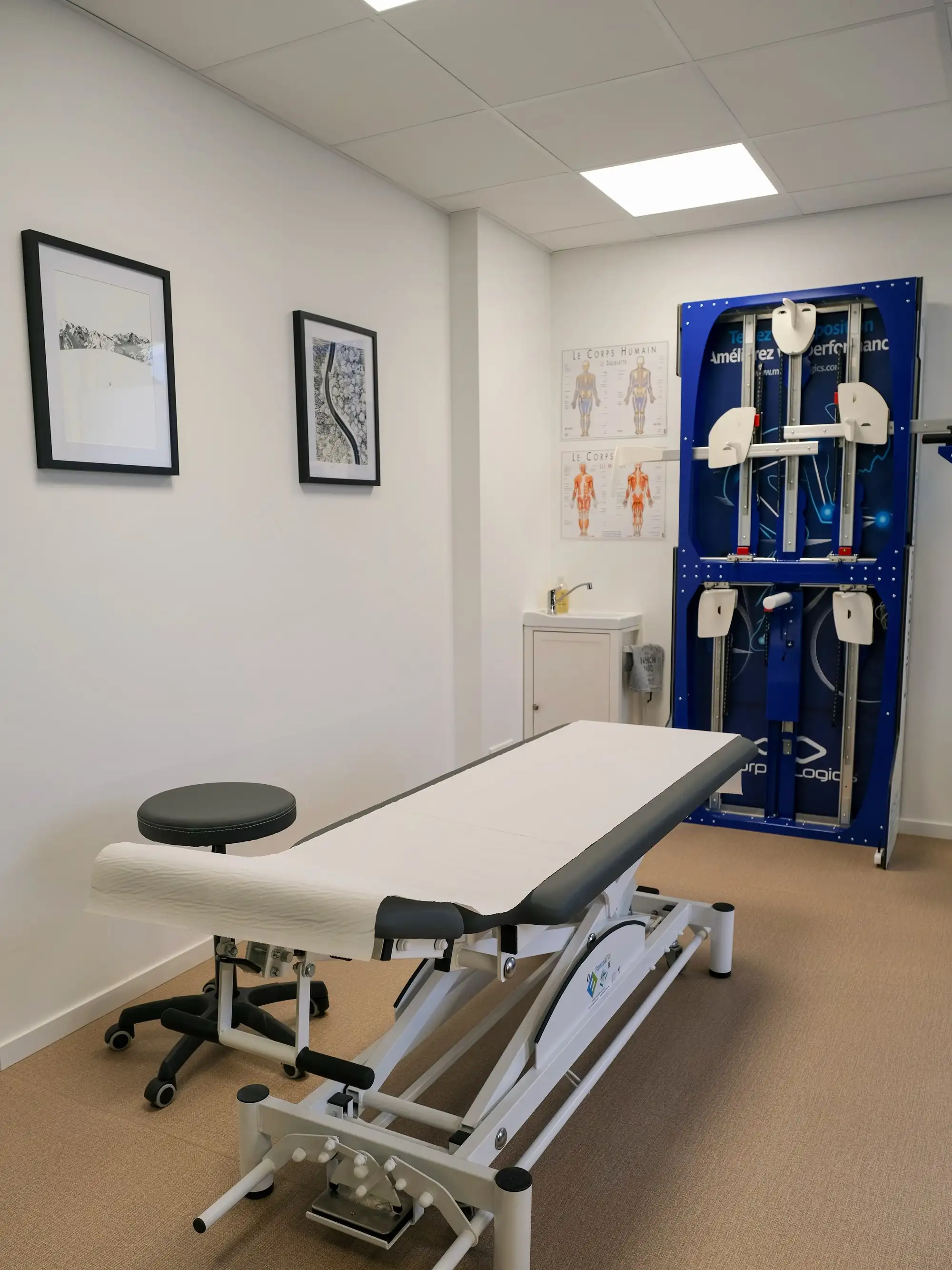
Sore on the saddle? I adjust the position before changing the saddle.
Appointments Monday to Saturday, 8 am to 8 pm, in Viviers-du-Lac. Book online any time or call 06 13 66 09 55.