Knee pain when cycling: the 4 postural causes
The knee is the joint that suffers most on a bike, and almost always because of a setup issue. The good news: where it hurts tells you the cause.
By Gaspard Blanc, osteopath (D.O.) and bike fitter · 12 October 2026
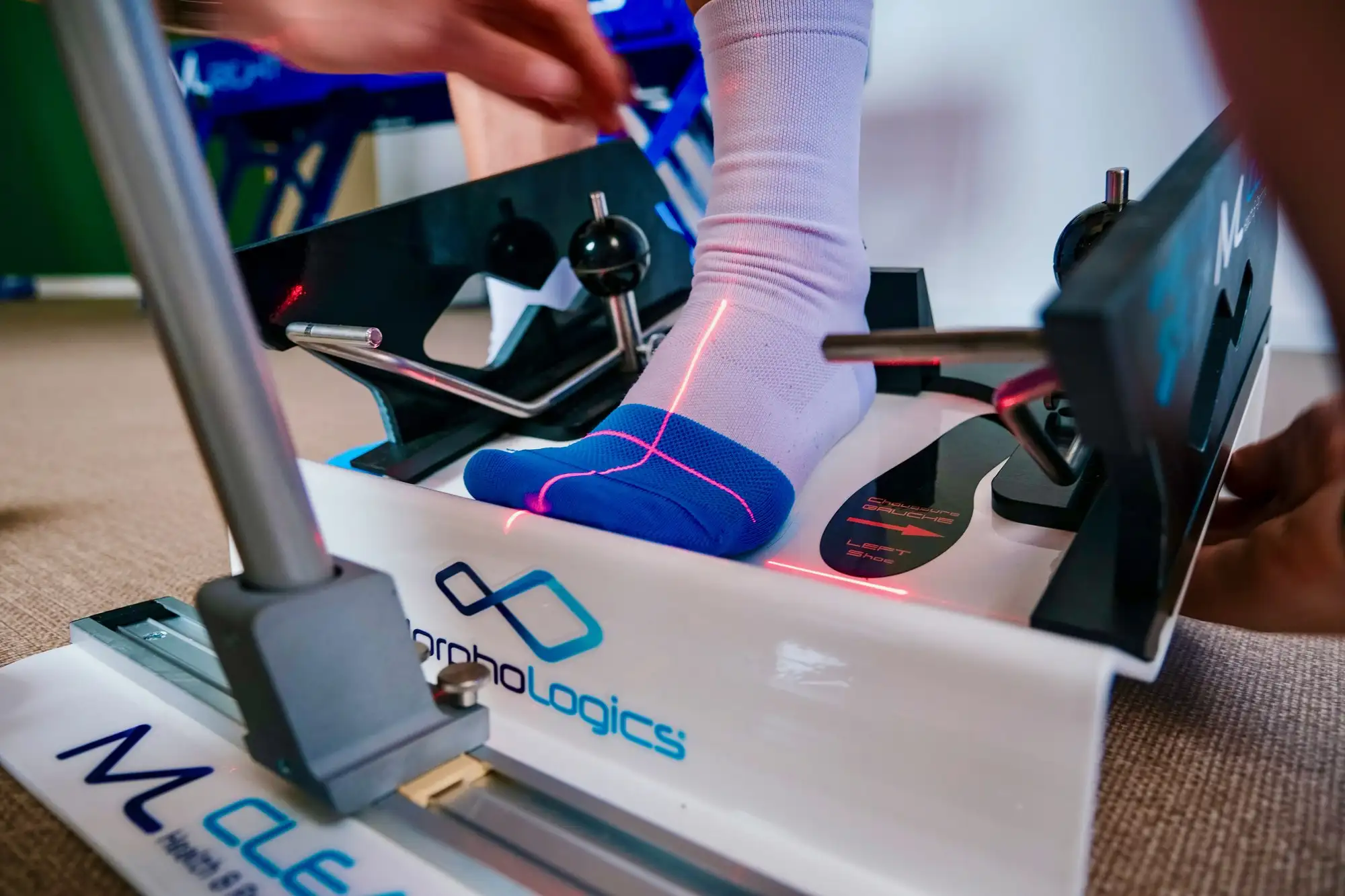
A cyclist makes about 5,000 pedal strokes per hour. A knee that works 2 mm off its axis takes 5,000 micro-stresses per hour. That is why knee pain on a bike rarely appears all at once: it settles in over a few rides, often after a change of bike, saddle, shoes, cleats, or training volume.
Before looking for the cause, locate the pain. Front, back, inside or outside: each area tells a different story.
1. Pain at the front of the knee: saddle too low or cleats too far forward
The pain sits under or around the kneecap, sometimes on the patellar tendon. It gets worse on climbs, under load, and when pushing big gears. The knee is too bent at the top of the pedal stroke and the kneecap is pressed against the femur.
Causes: saddle too low (the most common), saddle too far forward, cleats too far forward under the foot (the longer lever increases the load on the tendon), gears too big, cadence too low.
What I look at: the knee angle at the bottom of the pedal stroke (usually 140 to 150° in dynamic analysis), the cleat position relative to the big toe joint, ankle mobility. A stiff ankle drops the heel and is equivalent to a lower saddle.
2. Pain behind the knee: saddle too high
The pain is in the hollow of the knee or on the hamstring tendons. It appears after a long ride, especially if you have recently raised the saddle "to get more power". The pelvis rocks from side to side on every stroke to reach the pedal.
Causes: saddle too high, saddle too far back, cleats too far back (the opposite of the previous case), shorts or saddle that make you slide backwards.
What I look at: pelvic stability while pedalling, filmed from behind. If the hips are dancing, the saddle is too high, whatever formula gave you that height.
3. Pain on the outside: iliotibial band syndrome
Pain on the outer side of the knee, sometimes burning, that always appears at the same point in the ride and quickly becomes unbearable. It is the iliotibial band rubbing on the outer condyle of the femur with every flexion and extension.
Causes: cleats angled too far inwards, a knee that drops in towards the frame while pedalling, a Q-factor that is too narrow, saddle too high, a stiff hip or a weak gluteus medius.
What I look at: hip-knee-foot alignment from the front, cleat rotation and float, hip mobility in rotation. This is the typical case where I work on the body first (the hip), then on the bike (cleats, saddle).
4. Pain on the inside: cleats angled too far outwards or a collapsing foot
Pain on the inner side of the knee, often at the pes anserinus (where the inner tendons attach). Less common, it is linked to a knee that drifts outwards or to a foot that collapses inwards inside the shoe.
Causes: cleats angled too far outwards, a Q-factor that is too wide, a pronating foot without support, shoes that are too wide.
What I look at: how the foot bears weight inside the shoe, whether wedges or insoles are needed, cleat orientation.
What is not postural
Pain with swelling, locking, a feeling of instability or pain at night is not a setup problem: meniscus, cartilage, ligament. It needs a clinical examination and often imaging. I then refer you to your doctor for the appropriate imaging, before any adjustment.
Where to start
- Locate the pain precisely (front, back, outside, inside).
- Note what changed in the 4 weeks before it appeared: equipment, volume, cadence.
- Never move the saddle more than 3 mm at a time, and change only one thing at a time.
- If the pain persists after two rides, have your knee and your position examined together. That is the principle of a bike fit with an osteopath: the body, then the bike.
To go further: cyclists’ pain, area by area, and the road pedals comparison to understand the effect of Q-factor and contact area.
In short
Pain at the front of the knee when cycling: what is the cause?
Most often a saddle that is too low or too far forward, cleats that are too far forward, or gears that are too big. The patellar tendon and the kneecap are overloaded in flexion.
Pain behind the knee when cycling: what is the cause?
A saddle that is too high or too far back: the leg over-extends at the bottom of the pedal stroke and pulls on the hamstrings and the back of the knee.
Pain on the outside of the knee when cycling?
Iliotibial band syndrome (IT band): cleats angled too far inwards, a knee that drops in, an unsuitable Q-factor, a stiff hip. Cleats and alignment are the first things to check.
Should I stop cycling?
Rarely. The cause needs correcting. Pain that persists despite a correct setup needs a clinical examination, and imaging if a tendon is suspected.
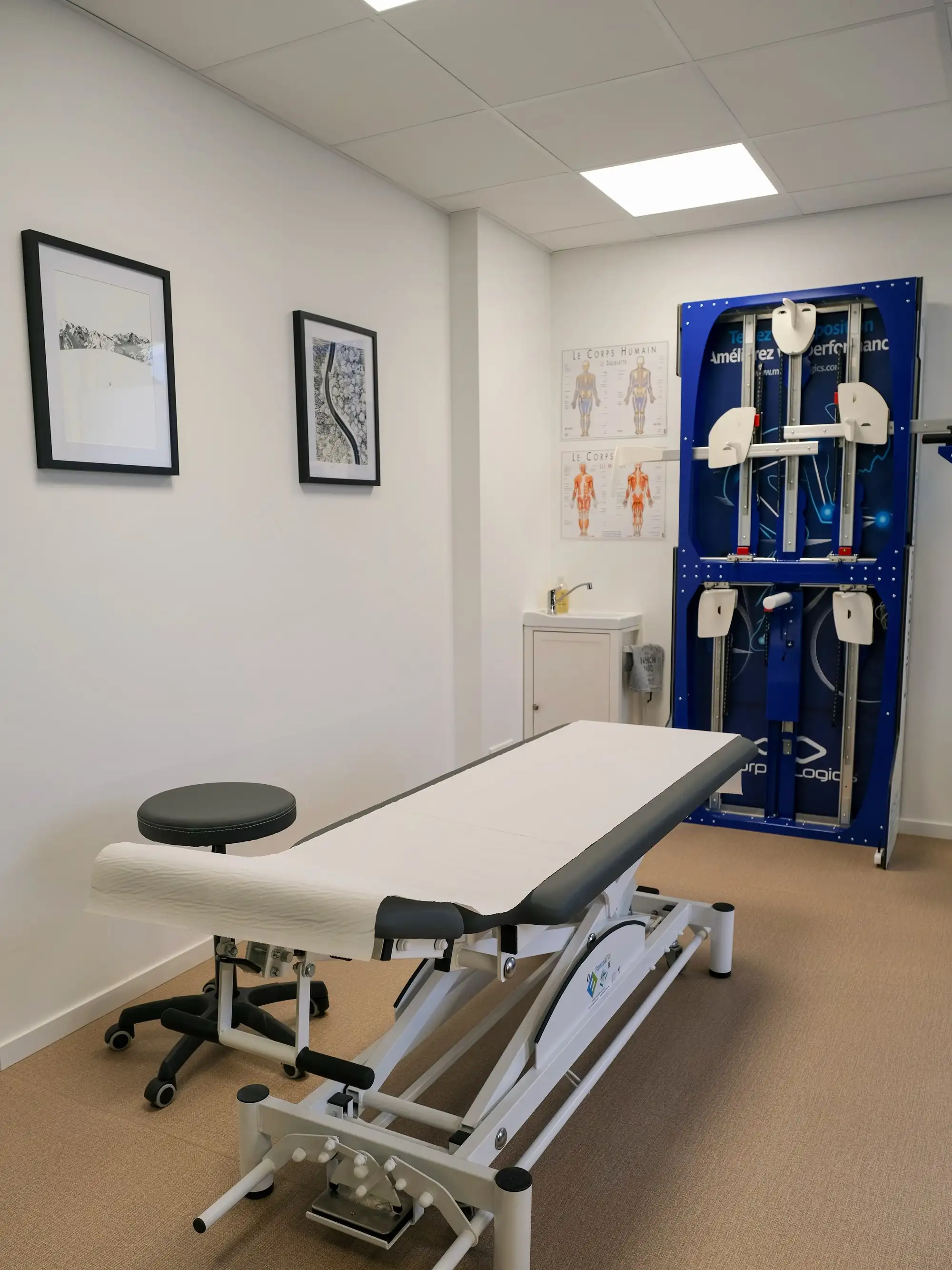
A knee that hurts on the bike? Let’s examine the knee, then the bike.
Appointments Monday to Saturday, 8 am to 8 pm, in Viviers-du-Lac. Book online any time or call 06 13 66 09 55.