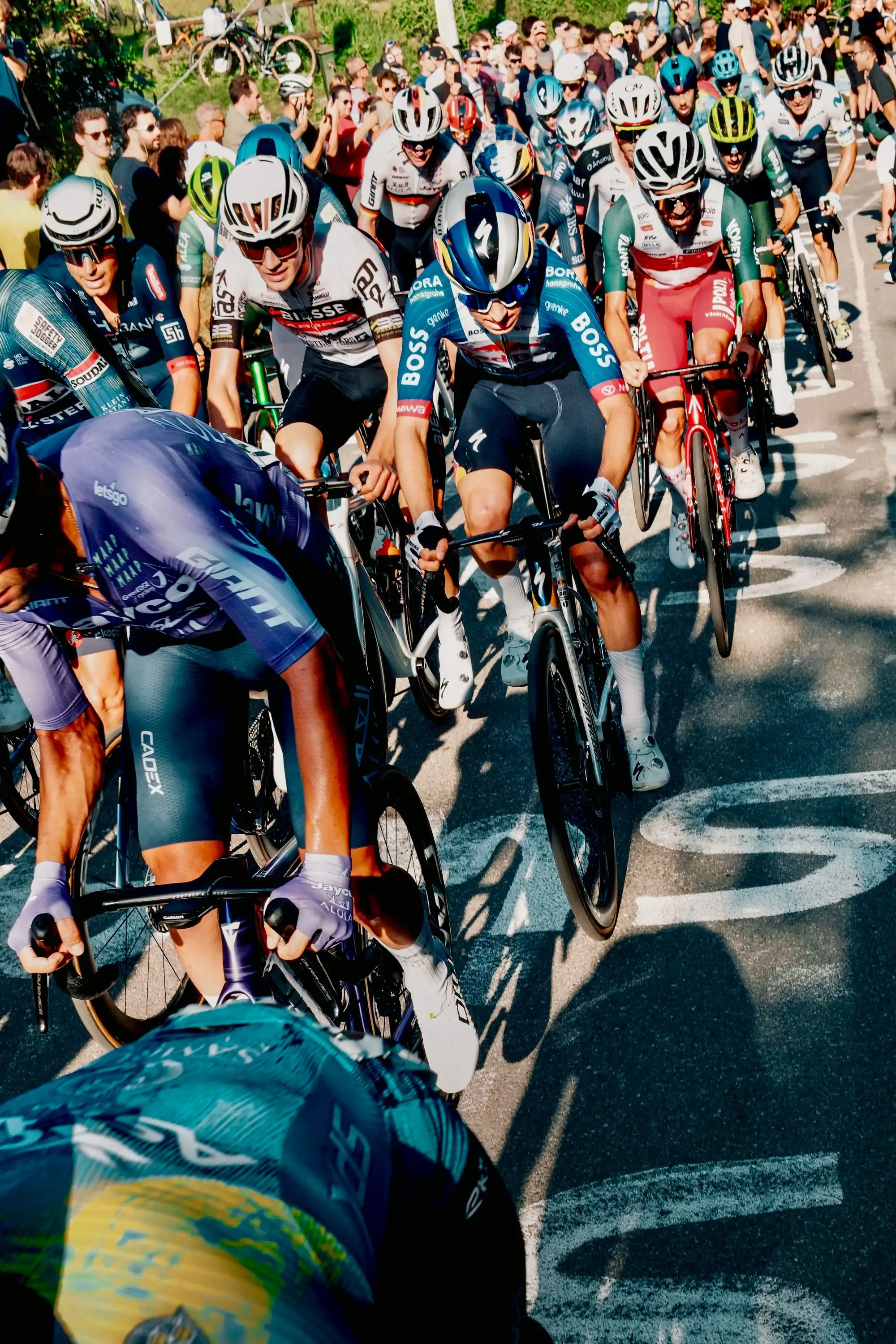
Numb hands on the bike: where it comes from, what can be adjusted, when to see a doctor
Fingers that tingle after an hour, a little finger that stays asleep in the evening, a hand that grips less well after a weekend of riding. It is one of the most frequent complaints in a bike fit. Here is what the studies say about the nerve involved, what can be adjusted on the bike, what gloves are worth, and the signs that should send you to the doctor.
By Gaspard Blanc, osteopath D.O. and bike fitter · 26 October 2026 · Studies cited at the end
In brief
- Numb hands are the second most common complaint among cyclists seen for a bike fit (21.5% of 1,505 records), and nearly one leisure cyclist in three reports them.
- Ring and little finger: ulnar nerve compressed at the heel of the hand. Thumb, index, middle finger: median nerve, the one in the carpal tunnel.
- Pressure peaks with the hands in the drops and the wrist bent. Gloves reduce it by 10 to 28%, without making up for a position that is too low or too stretched out.
- Weakness matters more than tingling: a hand that grips less well or a muscle wasting away means seeing a doctor.
- The hands are not always the only ones involved: the neck, the shoulders and the upper chest are part of the examination.
On very long rides, almost everyone goes through it. Before and after a 600 km ride, American surgeons examined 25 cyclists: 23 had motor signs, sensory signs or both at the finish. On a 540 km Norwegian event, 30% of participants reported numb fingers, half of them in the ulnar nerve territory alone, and 19% a weaker hand; in some, the complaints lasted up to eight months.
But you do not need to ride 600 km. In a survey of 518 leisure cyclists, 31% named the hands among their painful areas, behind the neck, the knees and the saddle area. And among 1,505 cyclists who came for a bike fit in Brazil, numbness in the hands or fingers ranked second among complaints, at 21.5%, just after the lower back. It is a common complaint, but not a trivial one: it tells you a nerve is being compressed.
Which fingers? What the area tells you
The first question I ask is not "since when", it is "which fingers". The map of the symptoms points to the nerve, and therefore to the setup or to the doctor.
| What you feel | Likely nerve or origin | What compresses it | Key point |
|---|---|---|---|
| Ring and little finger, palm side | Ulnar nerve, at Guyon’s canal | Heel of the hand pressing on the handlebar, wrist in extension | The most common form in cyclists |
| Hand weakness without tingling | Deep motor branch of the ulnar nerve | Same passage, purely motor branch | Gives no warning: watch closely |
| Thumb, index, middle finger | Median nerve, at the carpal tunnel | Prolonged wrist extension, pre-existing carpal tunnel syndrome | Often at night too, off the bike |
| Inner edge of the forearm and last two fingers | C8 root in the neck, ulnar nerve at the elbow, thoracic outlet | Neck in extension, shoulders hunched, weight on the elbows in the aero position | The hand is not the only place to examine |
| Whole hand, both sides, off the bike | Possible general cause | Not necessarily the bike | Doctor first |
A clinical pointer, not a diagnosis. Only an examination, and if needed a nerve conduction study / EMG prescribed by a doctor, can tell apart a compression at the wrist, at the elbow or in the neck.
What happens in the wrist
The ulnar nerve enters the hand through a narrow passage, Guyon’s canal, just under the heel of the hand on the little-finger side. That is precisely the area that rests on the handlebar. On an indoor trainer, an American team measured the pressure on this area in 36 experienced cyclists: between 134 and 165 kPa on average at peak, without gloves, and it was the hands in the drops position that gave the highest pressure and the most extended wrist. The authors consider these values sufficient to damage the nerve if they last.
The wrist angle matters as much as the pressure. On MRI, radiologists at Nancy University Hospital reproduced cycling positions on 47 wrists: with the wrist in extension, the deep branch of the nerve moves from 0.6 to 0.3 mm from the bone on average; with the wrist tilted towards the little finger, it is in contact with the bone in 47% of cases. A wrist bent upwards and outwards is exactly what you see when the handlebar is too far away or the hoods are badly angled.
Two details make this problem insidious. The deep branch of the ulnar nerve is purely motor: when it is the one being compressed, you feel nothing, and the hand loses strength without ever having tingled. Neurologists have described severe palsies of this branch, noting that a single ride can be enough. And cyclists’ nerves react even without symptoms: on elastography, the distal branches of the ulnar nerve in 30 asymptomatic cyclists were about twice as stiff as in non-cyclists. What this means in the long term is not yet known.
What can be adjusted, and what we really know about it
A clarification first. No study has yet linked a specific adjustment, saddle height, saddle nose tilt, handlebar reach, hood angle, to less numbness. A 2022 systematic review found no strong evidence linking standard bike fit measurements to cycling injuries. What follows is therefore a bike fitter’s biomechanical reasoning, consistent with the pressure measurements, and I present it as such.
The principle: less weight on the hands, and a neutral wrist. With the hands on the tops, peak saddle pressure is 29% higher than with the hands in the drops: when you lower your hands, that weight shifts forwards. And the harder you push on the pedals, the more the legs carry the torso: at 118 W, the saddle is 39% more loaded than at 300 W. At an easy pace in an aggressive position, the torso therefore rests more on the saddle and on the hands.
What I check, in order:
- The saddle nose tipping forwards: you slide, and hold yourself back with your hands.
- Saddle setback: a saddle too far forward puts the pelvis ahead of the bottom bracket and the torso on the handlebar.
- Reach, the distance from saddle to handlebar: too long, the arms lock and the wrist extends.
- Handlebar height relative to your real flexibility, not to that of race photos.
- The angle of the hoods and levers: the wrist should stay in line with the forearm, without bending upwards or outwards.
- Handlebar width, covered in detail in the article on handlebar width.
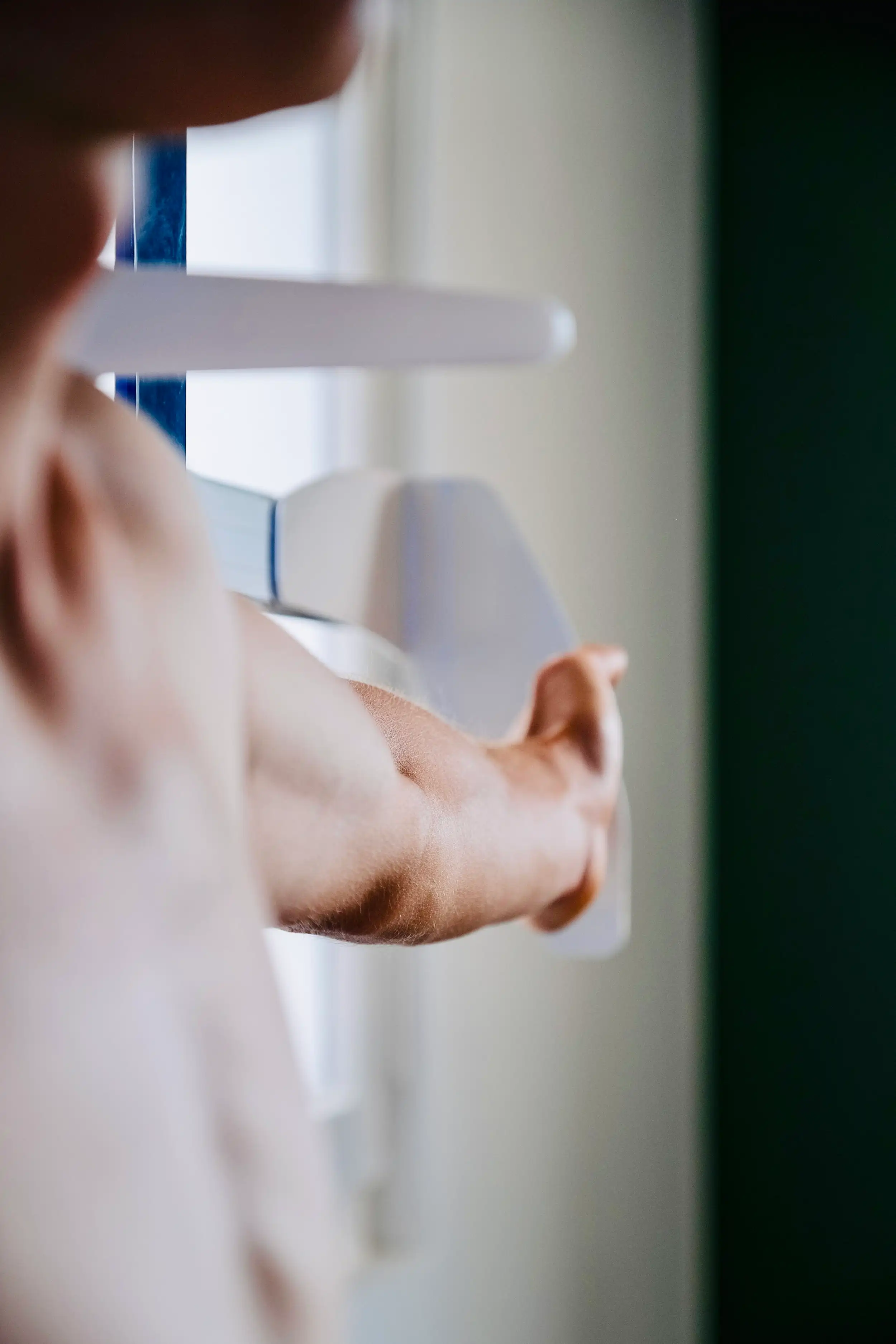
Gloves, bar tape, grips: what helps a little
Padded gloves reduce pressure on the ulnar nerve by 10 to 28%, with a slight advantage for thin foam over thick gel. Useful, but not enough. Against vibration, however, a laboratory study found no significant effect of gloves, gel or not.
Bar tape that is double-wrapped or more cushioning filters vibration better than gloves in a trial on a single cyclist: weak evidence, but consistent. Ergonomic grips with a palm rest on a mountain bike widen the contact area; no independent study has evaluated them, and a wing that is too large can shift the pressure towards the median nerve.
Changing position often is the most consistent recommendation in the studies, from the tops to the hoods then the drops, and a few seconds out of the saddle. It has never been tested in a trial, but it costs nothing. Keep your elbows slightly bent, and use wider tyres at slightly lower pressure if the road surface is poor.
On a mountain bike, sensory deficits are more frequent than on the road, and the vibration measured is stronger at the wrists than at the head or the pelvis. For gravel and e-bikes, there is no published data: the reasoning stays the same. MTB specifics are on the MTB bike fit page.
When the neck gets involved
The ulnar nerve originates in the neck, from the C8 and T1 roots, then passes through the outlet between the collarbone and the first rib, runs along the elbow and reaches the wrist. It can be irritated at several points at once, what doctors call a double crush. In 70 cyclists, researchers in Texas compared arms with and without ulnar numbness: in the symptomatic group, neck pain was three times more likely, shoulder pain five times, and a high first rib twelve times. This is a clinical association, without systematic nerve conduction studies, not proof of cause. But it justifies not looking only at the hand.
The neck is in fact the first painful area named by leisure cyclists, at 48.8% in the survey already cited: neck in extension to look at the road, shoulders hunched when the handlebar is too far away. If your neck hurts too, the article on back and neck pain on the bike and the neck pain page complement this one.
When to see a doctor
Tingling that goes away within the hour or the day is a sign of compression: you reduce the weight on your hands, you adjust the bike. The following signs, however, call for a doctor, who will decide on a nerve conduction study / EMG. This list is a summary of the studies cited, not an official guideline: no French guideline exists for the cyclist’s hand.
- Weakness or clumsiness of the hand: difficulty holding a key, doing up buttons, spreading the fingers.
- A muscle wasting away, especially in the hollow between the thumb and the index finger.
- Fingers that stay clawed, or a thumb that bends when you pinch a sheet of paper between thumb and index finger.
- Numbness that does not go away in the days after the ride.
- Symptoms at night or off the bike, or both hands affected with no link to riding.
- Neck pain running down into the arm, problems with walking or balance.
- Symptoms that appeared after a fall.
For carpal tunnel syndrome, the Haute Autorité de Santé (French National Authority for Health) finds signs of severity in 10% of cases, and considers surgery necessary when the muscle at the base of the thumb wastes away or the thumb can no longer touch the little finger. For the cyclist’s ulnar nerve, most cases heal with rest and conservative treatment, surgery being reserved for failures.
Recovery times range from a few days for mild compression to several months when the motor branch is affected: in one case followed with successive nerve conduction studies, recovery began between the second and third week and was almost complete at around fourteen weeks. Conversely, a 23-year-old cyclist who kept riding without a diagnosis after crossing Canada still had loss of sensation seven years later. A weak hand is not a nuisance to put up with until the end of the season.
What I do for numb hands
First, sorting things out. Which fingers, since when, on the bike only or at night too, with or without loss of strength. I test sensation, pinch strength and the strength of the hand muscles, and I look for warning signs. If there are any, I refer you to your doctor before any adjustment or treatment: that is what French law on osteopathy provides for, and it is what protects the nerve. The signs that call for a doctor, for the hand as for everything else, are gathered in the article when to see a doctor before the osteopath.
Then, the body. In osteopathy, I examine the mobility of the neck, the upper back, the first rib, the shoulders, the elbow and the wrist, the whole path of the nerve. What I find stiff gets treated. That is my clinical reasoning, alongside the setup, never instead of a medical opinion when one is needed.
Finally, the bike. In a bike fit, I measure handlebar reach and height relative to your body, I film the wrist and the shoulders on the indoor trainer, and I adjust the saddle before the handlebar, because a badly placed saddle makes the hands carry the torso. Adjustments in the following weeks are included. The combined view of osteopath and bike fitter is detailed on the osteopath for cyclists page.
Numb hands on the bike: your questions
Why do my hands go numb on the bike?
Most often, because the heel of the hand presses on the ulnar nerve at the wrist, in a passage called Guyon’s canal. A wrist in extension and bent outwards brings the nerve even closer to the bone. The numbness then affects the ring finger and the little finger. When it is the thumb, index and middle finger, it is more likely the median nerve, the one in the carpal tunnel.
Is it serious if my fingers tingle after a ride?
Tingling that disappears within the hour or the day is a sign of compression, not established damage. It tells you to reduce the weight on your hands. What should worry you is weakness: difficulty gripping, holding a key, spreading the fingers, or a muscle wasting away between the thumb and the index finger. Then you need a medical opinion.
Are padded gloves enough?
They help a little. In the reference study, gloves reduced pressure on the ulnar nerve by 10 to 28%, with a slight advantage for thin foam over thick gel. They change almost nothing for vibration. If the handlebar is too far away or too low, the glove does not make up for the position.
How long does it take for feeling to come back?
For mild compression, from a few hours to a few days. When the motor branch of the nerve is affected, the cases followed up show recovery over several weeks, up to three or four months, and some cyclists still have complaints eight months after a very long event. One published case with no treatment still had loss of sensation seven years later: do not keep riding as if nothing were wrong.
My hands also go numb at night. Is it the bike?
Perhaps, but night-time symptoms point first to carpal tunnel syndrome, which exists independently of cycling and which cycling can make worse. A wrist splint worn at night is effective on these symptoms according to the Haute Autorité de Santé (French National Authority for Health). If the signs persist or come with weakness, see your GP: a nerve conduction study / EMG will clarify things.
Can the neck cause numb hands?
Yes. A nerve root in the neck, the eighth cervical root, supplies roughly the same area as the ulnar nerve, and the nerve can be irritated at several points at once. In cyclists with ulnar numbness, one study found three times more neck pain and five times more shoulder pain than in those without symptoms. That is why I also examine the neck, the shoulders and the upper chest, not just the wrist.
Studies and sources cited
The data come from peer-reviewed studies, read as abstracts or in full text, and from the Haute Autorité de Santé (French National Authority for Health) guideline on carpal tunnel syndrome. The links between a specific adjustment and numbness have not been demonstrated by trials: they are presented in the article as a bike fitter’s reasoning.
- Patterson J.M., Jaggars M.M., Boyer M.I., "Ulnar and median nerve palsy in long-distance cyclists. A prospective study", American Journal of Sports Medicine 31(4), 2003
- Andersen K.V., Bovim G., "Impotence and nerve entrapment in long distance amateur cyclists", Acta Neurologica Scandinavica 95(4), 1997
- Akuthota V. et al., "The effect of long-distance bicycling on ulnar and median nerves: an electrophysiologic evaluation of cyclist palsy", American Journal of Sports Medicine 33(8), 2005
- Wilber C.A. et al., "An epidemiological analysis of overuse injuries among recreational cyclists", International Journal of Sports Medicine 16(3), 1995
- Oliveira F.C. et al., "Tackling the top musculoskeletal challenges of cyclists: Insights from bike Fit services", Journal of Bodywork and Movement Therapies 42, 2025
- Slane J. et al., "The influence of glove and hand position on pressure over the ulnar nerve during cycling", Clinical Biomechanics 26(6), 2011
- Rauch A. et al., "Analysis of the position of the branches of the ulnar nerve in Guyon’s canal using high-resolution MRI in positions adopted by cyclists", Surgical and Radiologic Anatomy 38(7), 2016
- Capitani D., Beer S., "Handlebar palsy: a compression syndrome of the deep terminal (motor) branch of the ulnar nerve in biking", Journal of Neurology 249(10), 2002
- Dąbrowska A. et al., "The elastography of distal ulnar nerve branches in cyclists", Journal of Hand Therapy 37(1), 2024
- Bressel E., Cronin J., "Bicycle seat interface pressure: reliability, validity, and influence of hand position and workload", Journal of Biomechanics 38(6), 2005
- Sanseverino G. et al., "Understanding the effect of gloves on hand-arm vibrations in road cycling", Proceedings 49(1), 2020
- Smith T.M. et al., "The double crush syndrome: a common occurrence in cyclists with ulnar nerve neuropathy. A case-control study", Clinical Journal of Sport Medicine 18(1), 2008
- Visentini P.J., McDowell A.H., Pizzari T., "Factors associated with overuse injury in cyclists: A systematic review", Journal of Science and Medicine in Sport 25(5), 2022
- Sirisena D.C. et al., "Median and ulnar nerve injuries in cyclists: A narrative review", Biomedicine (Taipei) 11(4), 2021
- Chiaramonte R. et al., "Preventive strategies, exercises and rehabilitation of hand neuropathy in cyclists: A systematic review", Journal of Hand Therapy 35(2), 2022
- Brubacher J.W., Leversedge F.J., "Ulnar Neuropathy in Cyclists", Hand Clinics 33(1), 2017
- Barkhaus P.E. et al., "Serial electrodiagnostic studies in acute partial conduction block from cyclist’s palsy", Muscle & Nerve 68(5), 2023
- Brown C.K., Stainsby B., Sovak G., "Guyon Canal Syndrome: lack of management in a case of unresolved handlebar palsy", Journal of the Canadian Chiropractic Association 58(4), 2014
- Haute Autorité de Santé (French National Authority for Health), "Syndrome du canal carpien : optimiser la pertinence du parcours patient" (Carpal tunnel syndrome: optimising the appropriateness of the patient pathway), 2013
Literature search carried out on 26 October 2026.
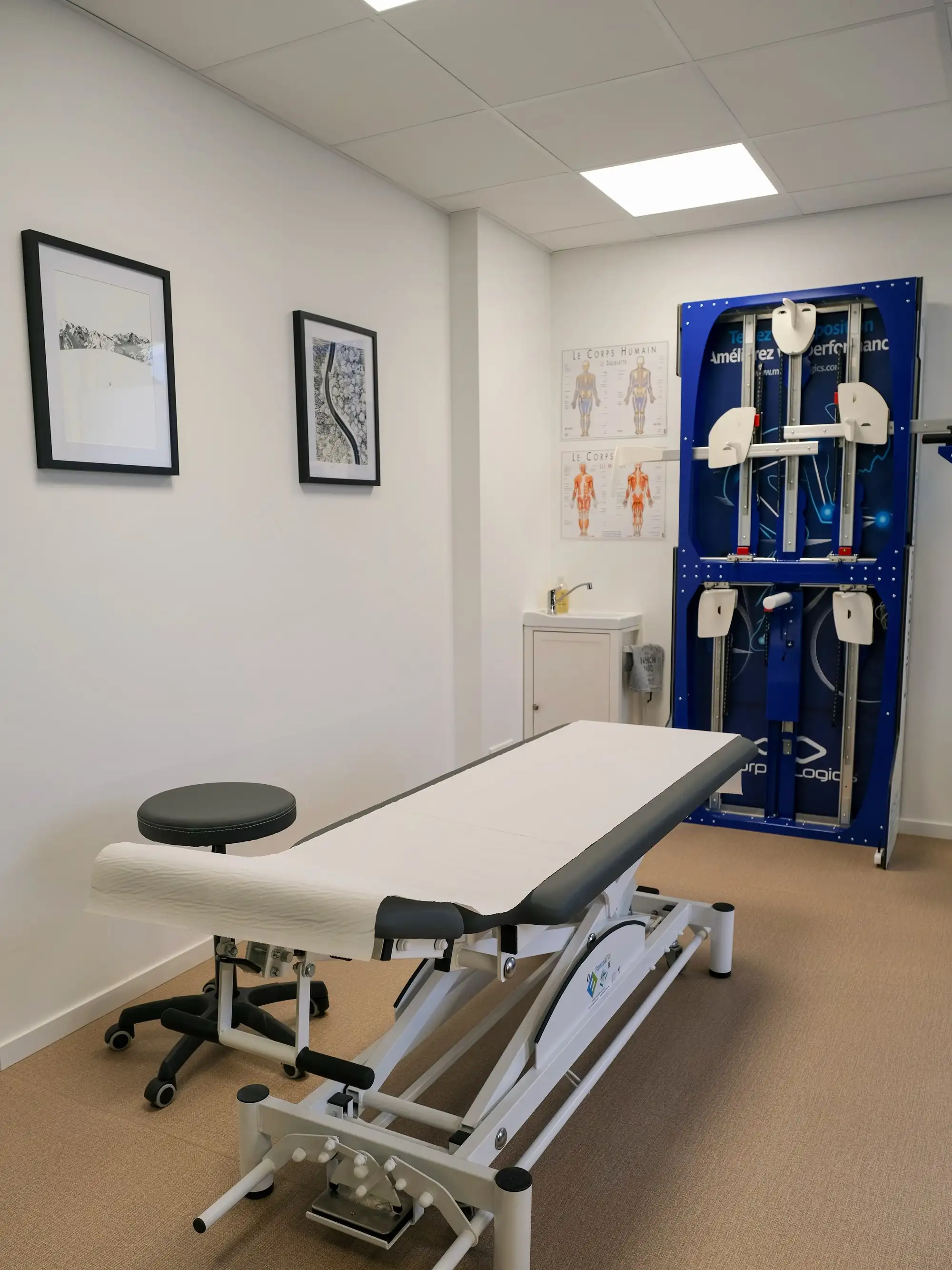
Fingers going to sleep on every ride? Let’s set the weight on your hands before the problem settles in.
Full bike fit with osteopathic examination, measurement of handlebar reach and height, video analysis on the indoor trainer. In Viviers-du-Lac, between Aix-les-Bains and Chambéry.